Storage Tips
Store nothing dirty. Wash clothing and linens — body oils and food residue set into permanent stains and attract pests. Empty and fully dry refrigerators, washers, and coolers, then leave the doors cracked so air can move; a sealed damp appliance will smell like a science experiment in three months. Wipe down furniture and vacuum upholstery before it goes in.
A quick look catches a leak, a pest, or a shifted stack before it becomes expensive.
Many homeowners and renters policies extend some coverage to stored items, but the limits vary a lot. Confirm now.
Bed frames, table legs, shelving. Bag the hardware and tape it to the piece it belongs to.
A partially full box collapses under the weight of whatever's stacked on it. Pack out the gaps with linens or paper.
Label boxes on the side rather than the top — once they're stacked, the tops disappear. Write what's inside, not just the room it came from; "kitchen" tells you nothing when you're looking for one specific pan. Number the boxes and keep a matching list, with a copy at home and one taped inside your unit door.
Concrete sweats. Moisture wicks up through a slab and into the bottom layer of whatever's sitting on it, which is how people end up with a ruined bottom row of boxes and no idea why. A few pallets or a layer of scrap boards solves it for almost nothing. This matters most for cardboard, fabric, and anything paper.
Stack along the walls and leave a walkway down the center so you can reach the back of the unit without emptying the front of it. Put whatever you'll need soonest closest to the door. Customers who skip this step almost always regret it on the first visit back.
Choose climate control if you're storing wood furniture, electronics, photographs, documents, artwork, leather, musical instruments, clothing, or upholstery — anything that warps, cracks, fades, or grows mildew when temperature and humidity swing. Also choose it for anything staying more than a few months, since time multiplies every one of those risks. On the coast, salt air and humidity make the case even stronger.
A standard drive-up unit isn't a downgrade. It costs less per square foot and it's far easier to load, since you can pull right up to the door. It's the right choice for short-term storage between moves, vehicles and trailers, lawn equipment, metal tools and building materials, patio furniture and grills, and sealed bins of non-fragile household goods. A useful rule of thumb: if it's lived in your garage for years and it's fine, a standard unit will treat it about the same.
Huricane Prep
Storing in a coastal town
Hurricane season runs June through November, and the time to make a storage plan is before a storm is named not when the forecast cone is already over us. Once a watch is issued, roads get busy and so do we.
A few things worth knowing:
1. Pack important documents in a waterproof container regardless of where they're going
2. Elevate everything off the floor on pallets, at home and in your unit
3. Bring your inventory list and photos up to date before the season starts — insurance claims go much more smoothly with them
4. Fuel and propane can't come with you into a unit, so plan for those separately
Be honest about limits. A storage unit is a sturdy, dry building, but no facility can guarantee that a major storm won't cause damage or flooding. Your renters or homeowners policy — or a tenant insurance plan — is what actually protects the value of your belongings. Check your coverage now, not after. And the most important part: if an evacuation order comes, go. Belongings can be replaced. Don't make a storage run your reason for staying.
Before You Arrive
A few minutes of prep saves a trip back home.
(all of this can be done on the phone as well)
- Have your ID ready. A valid driver's license, state ID, passport, or military ID. The name has to match the name going on the lease.
- Sort out your payment method. We accept [credit/debit, check, cash]. If you want to set up autopay, bring the card you'd like to use.
- Check your insurance. If you're using your own homeowners or renters policy, bring a copy of the declarations page showing coverage for stored belongings. If you don't have coverage, ask us about our tenant protection plan.
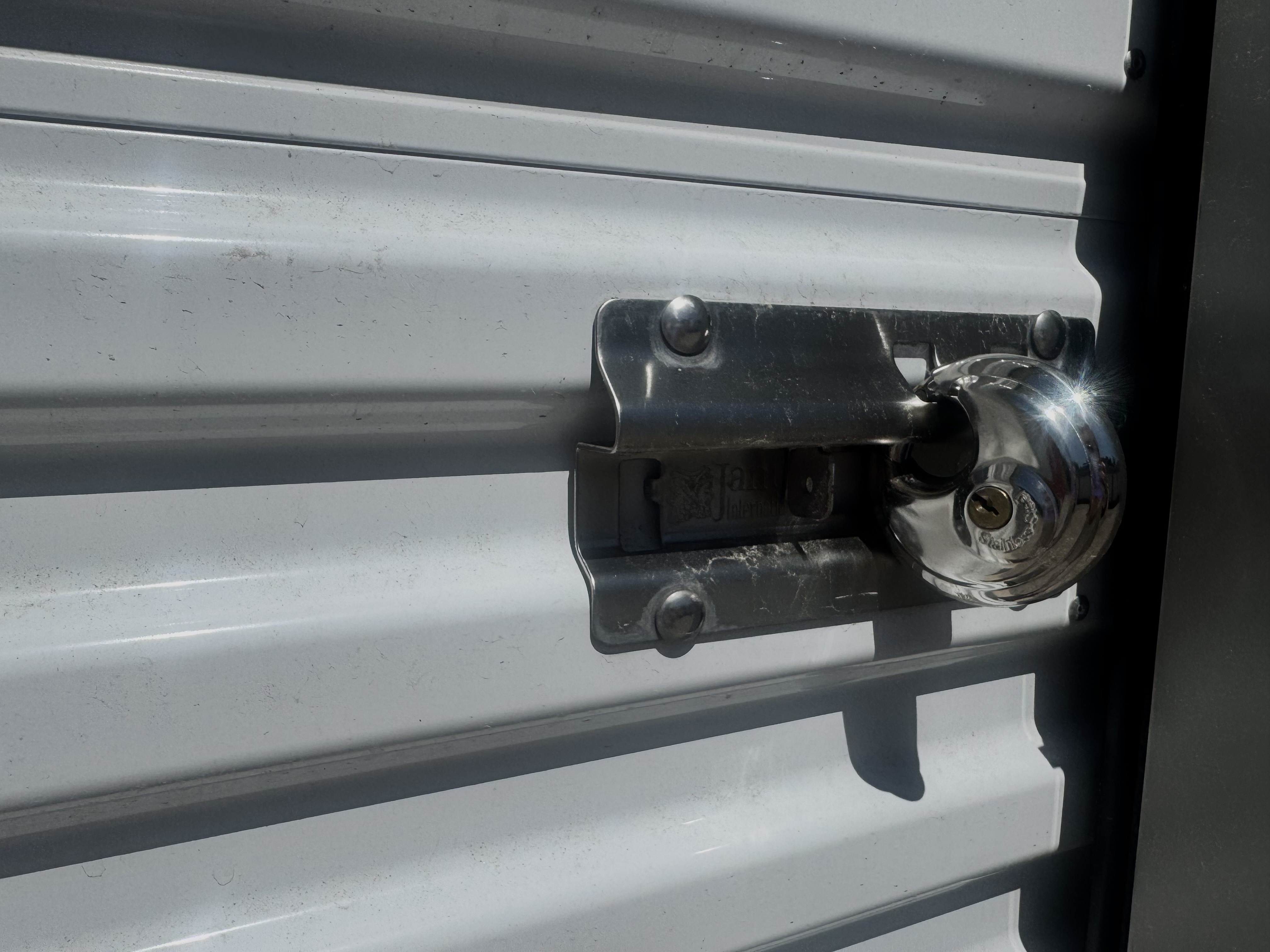
- Buy a lock, or plan to buy one here. We recommend a disc lock over a padlock — the shielded shackle is much harder to cut. We sell them in the office if it's easier.
- Have a second contact ready. We'll need a name, phone number, and address for your file.
On Move-In Day
- Bring the right gear. A dolly, furniture pads, and a second set of hands. We have carts available on site.
- Bring pallets or boards to keep your boxes off the concrete floor.
- Bring your inventory list and check items off as they go in. It takes five extra minutes and saves hours later.
- Test your lock on the way out. Give it a real pull to make sure it's fully engaged. A unit left unlocked is the most common preventable problem we see.
Questions before you come in? Call us at [phone] and we'll tell you exactly what you need for your situation.
Reserve your storage unit in under 5 minutes
No deposit. No long-term contract. Cancel anytime. Lock in today's rate online.